Platform Science
I led strategic partnership design that enabled major OEM adoption of the Virtual Vehicle platform, introducing Vehicle Health Intelligence as a new native integration category.
Major OEM Partnerships
Led platform design supporting adoption by major players including Cummins Inc., announced at TMC25 (March 2025).
Senior Product Designer
Led partnership design, registration experience, and platform integration from October 2021-September 2025.
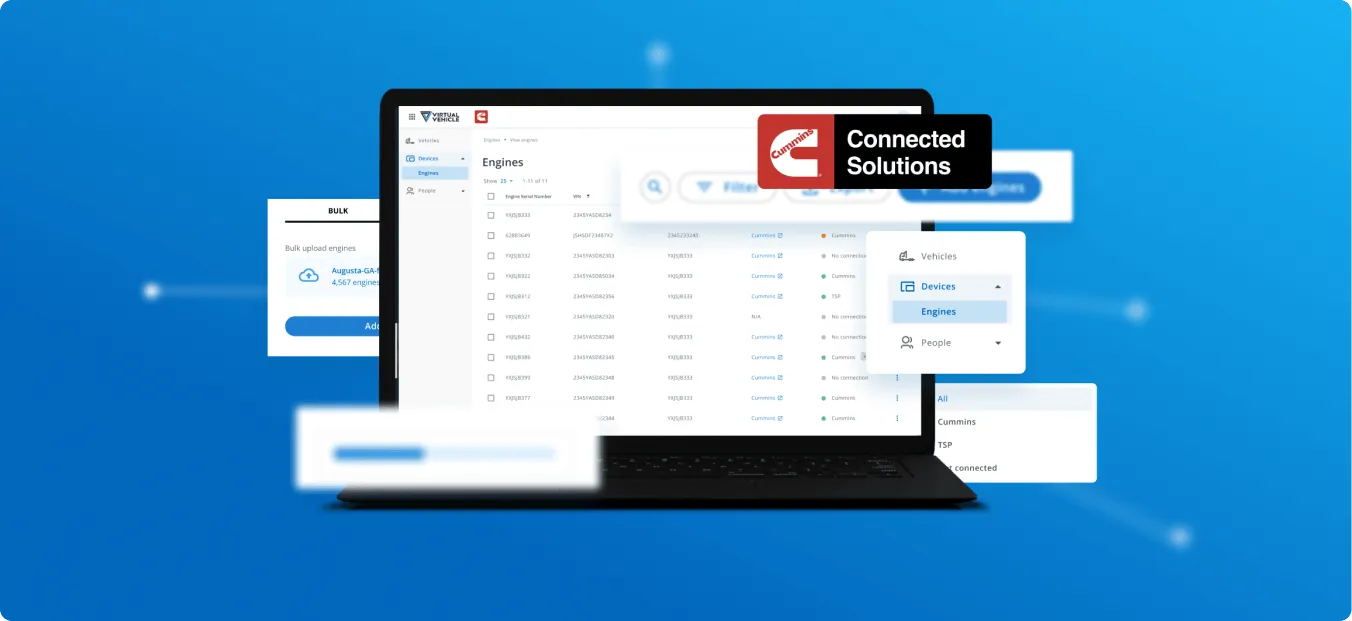
"Our customers need prioritized, actionable insights for all their vehicles in one place, and the Virtual Vehicle portal is a key step toward that vision."
"Connecting everything that moves"
Fleet managers in freight tech face a fragmented landscape of monitoring systems across vehicles, engines, and components. Each system requires separate logins, different interfaces, and manual data correlation across touchpoints. When Cummins Inc., a global power solutions leader with $34.1B in annual revenue, needed to modernize how their customers access engine health insights, they required "prioritized, actionable insights for all their vehicles in one place." Their existing Connected Solutions portal served critical fleet needs, but Cummins wanted to exit web UX entirely and focus on what they do best: making engines. They trusted Platform Science to be the partner that could deliver a world-class user experience for their customers.
The design challenge was twofold: create information architecture flexible enough to accommodate diverse OEM data models and fleet management workflows while introducing Vehicle Health Intelligence as an entirely new integration category. This meant designing seamless transition paths for existing Cummins customers while establishing patterns that would scale to future Tier 1 OEM partnerships. The solution needed to balance Cummins' enterprise requirements with Platform Science's platform vision, setting a foundation for multi-manufacturer adoption.
Co-creating the future of fleet intelligence
I led the design of a flexible information architecture that enabled major OEM partnerships by creating scalable patterns for complex integrations:
- Information Architecture at Scale: Designed comprehensive IA supporting multiple OEM data models, from engine diagnostics to vehicle connectivity patterns, while maintaining consistent user experience. This architecture introduced Vehicle Health Intelligence as a new native integration category, accommodating remote diagnostics, real-time engine data, and OTA firmware updates.
- Streamlined Registration Experience: Created registration flow enabling users to complete online registration, connect vehicles and data sources, and gain immediate access to Connected Solutions insights without friction. This became the template for future OEM onboarding.
- Rapid Design-to-Dev Pipeline: Pioneered AI-assisted workflow using Figma MCP and Windsurf to transform design specs into production-ready React components, reducing component creation time from 10 days to 2. This 80% faster delivery enabled rapid response to partnership requirements and technical validation needs.
- Platform Validation Strategy: Positioned Cummins integration as proof point that Virtual Vehicle could serve as "the most robust application ecosystem" for commercial transportation, directly influencing future Tier 1 OEM partnership adoption.
- Scalable Design System: Built reusable patterns and components enabling rapid customization for new OEM partners without rebuilding core functionality, supporting the platform's multi-manufacturer vision.
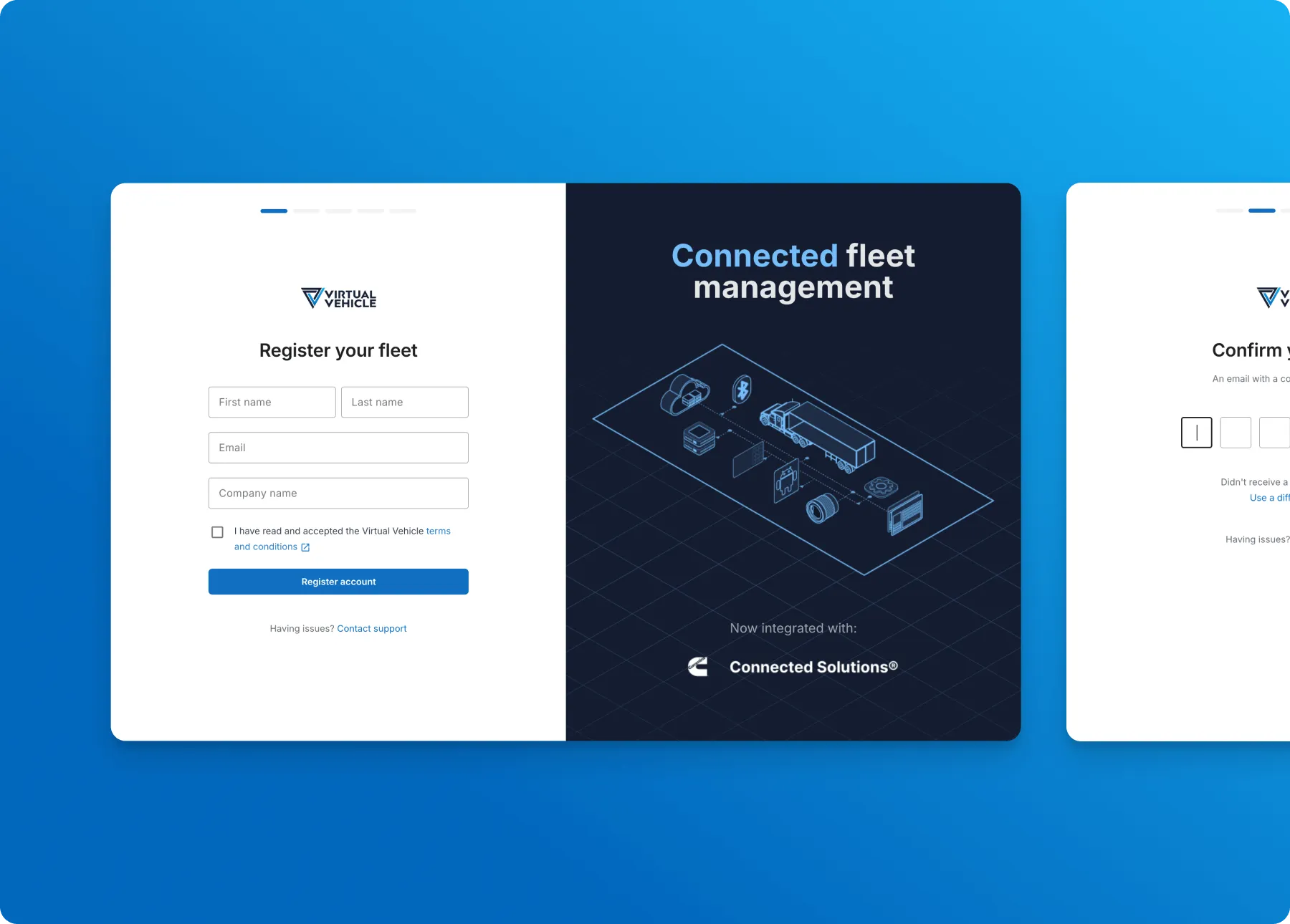
Component creation time reduced from 10 days to 2, enabling rapid iteration on partnership features
AI-Assisted Design-to-Dev Pipeline
Pioneered integration of AI tools to accelerate partnership delivery while maintaining design quality and consistency.
- Figma MCP: Connected design directly to development environment for automated component extraction
- Windsurf: Leveraged AI-assisted development to transform design specs into production-ready React components
- Storybook: Automated component documentation and visual regression testing for quality assurance
This workflow innovation became a competitive advantage, enabling 80% faster response to OEM partnership requirements.
Major OEM partnerships enabled
March 2025: Platform Science announced partnerships with major industry players at TMC25, validating Virtual Vehicle as the premier OEM integration platform:
- Tier 1 OEM Adoption: Enabled major manufacturers including Cummins Inc. ($34.1B global power leader) to transition their Connected Solutions® portal to Virtual Vehicle, providing fleets with streamlined access to vehicle intelligence
- Complex IA at Scale: Information architecture successfully supported multiple OEM data models and fleet management workflows across diverse manufacturer requirements
- Strategic Design Impact: Demonstrated ability to balance enterprise partnership requirements, technical architecture, rapid prototyping, and go-to-market positioning at staff/director-level scope
Key Technologies & Capabilities
- • Stakeholder research & requirements gathering
- • Complex IA and system design
- • Interactive prototyping for POC validation
- • Cross-functional partnership coordination
- • Figma MCP for design-to-dev acceleration
- • React & TypeScript implementation